
Why Property Owners Should Verify Conservation Easements Before Planning New Construction
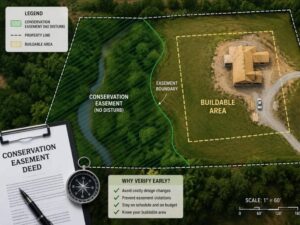
A conservation easement can shape how you use your land long before you break ground on anything new. Many owners buy a lot, picture a bigger garage or a wider driveway, then learn that a recorded easement sits right where they wanted to build. That kind of surprise costs real money, and it usually shows up after design work has already started. So checking the easement early gives you a clear head start on the whole project.
An easement like this stays with the land, not the person who signed it. When ownership changes hands, the limits stay in place, even if the new owner never reads the fine print. Knowing what the agreement allows, and what it blocks, helps you plan around it instead of fighting it later. That simple step can save months of frustration.
Conservation Easements Can Limit Where New Work Can Happen
A conservation easement often protects certain parts of a property, such as trees, wetlands, a stream buffer or open space. Inside those protected areas, you may not clear, grade, pave or build without breaking the agreement. That can affect a new driveway, an addition, a shed or even where you park equipment while the job runs. What looks like a small change can bump right into a protected zone.
Some easements go further and cap how much of the lot you can disturb at all. So a plan that reads fine on paper can cross a line you didn’t know was there. Once you understand these limits first, you can steer the design toward the parts of the land that stay open for use. That way, your goals and the easement can share the same property in peace.
Why Deed Language Alone May Not Show the Full Site Impact
Deed and easement documents describe restrictions in words, but words don’t always match what you see on the ground. A written description might point to an old marker, a distance or a natural feature that has shifted or vanished over the years. Reading the text by itself can leave you guessing about where the protected zone actually falls. And when you’re guessing, you’re gambling with your budget.
That gap matters most near the edges, where a few feet decide whether your project is allowed. Comparing the recorded language with real field conditions closes that gap for good. A field check turns a vague paragraph into a line you can point to on your own lot, which gives every later decision a solid base.
How Survey Data Helps Identify Buildable Areas Early
A survey maps the easement against the rest of your property, so you can see the open land clearly before you spend on design plans. Once the protected area shows up on a drawing, the space you can actually use becomes obvious. That view helps you decide if your goals fit the site or need a rethink while changes are still cheap.
Owners who get this information early avoid paying an architect to design around a spot that was never available. They also walk into builder conversations already knowing the real limits, so the talk stays practical. The survey then works as a shared reference that keeps everyone on the same page from the first meeting onward.
Easement Boundaries Matter Before Clearing or Grading Begins
Clearing and grading move fast, and mistakes near a protected area are hard to undo. Once a crew removes trees or reshapes the ground inside an easement, the damage can bring fines and repair orders that dwarf the original savings. Marking the boundary before that work begins keeps machines on the right side of the line.
Common site actions that a conservation easement can restrict:
- Removing trees or brush inside a protected buffer
- Grading or filling near a stream or wetland
- Adding driveways, paths or parking over protected ground
- Storing materials or equipment in a no-disturbance zone
- Expanding a yard or lawn into open-space areas
When Owners Should Call a Surveyor Before Design Moves Forward
The best time to confirm an easement comes before architects, builders or engineers lock in a plan. Early survey work lets the design team place structures where the land allows, right from the first sketch. That saves the cost of revisions after drawings are already done, and it keeps the schedule from slipping.
Waiting until permits or construction can turn a small check into a big delay. If you bring in a surveyor while ideas are still flexible, you keep your options open and your budget calmer. A little clarity up front protects the whole project down the line, and it spares you the worst kind of surprise.
Frequently Asked Questions
What is a conservation easement on private property?
It’s a recorded limit on how part of your land can be used, often set up to protect trees, water, open space or wildlife habitat. The rule stays attached to the property, so it applies to every future owner, not only the person who first agreed to it. That means it carries over to you the day you buy.
Can a conservation easement affect a home addition?
Yes. If the addition, a new driveway or the grading around it falls inside the protected area, the easement can block or reshape those plans. Checking the boundary first tells you whether your addition fits the open part of the lot before you pay for a design.
Can a survey show where the easement affects the property?
A survey maps the protected zone against your lot lines and existing features, so you can see how the easement lines up with what you hope to build. That drawing gives you a solid base for talking with designers and local reviewers, and it removes a lot of doubt.
For a free land surveying quote, call us at (703) 854-9783 or send us a message by going here.
Posted in Construction Survey