
How Surveyors Restore Missing Property Line Markers Legally
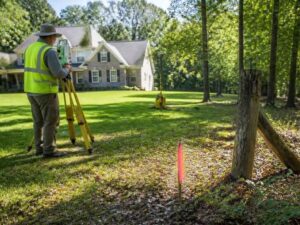
Land doesn’t come with painted lines. The pins, rods and stakes that mark your lot can go missing over the years. A property line survey is how a licensed surveyor puts those markers back where they legally belong. For developers building in Fairfax, that step guards your budget before the first shovel moves. Skip it, and you might pour a footing over a line you can’t even see.
Missing markers don’t erase your boundary. The legal line still lives in the county records. A surveyor can find that line again and reset each corner.
Why Property Line Markers Can Disappear Over Time
Markers vanish for plain reasons. Time, weather and construction all take a toll. A rusted iron pin can sink below the surface or rot away completely.
Grading crews scrape topsoil and haul off the pins with it. Utility work, new driveways and landscaping bury or bend the markers. Some corners were never marked well in the first place.
Older lots are the worst offenders. A parcel platted decades ago may have wood stakes that are long gone. On raw land near Fairfax, thick brush and shifting soil hide property markers fast. None of this changes where your line sits, but it does make the line hard to prove on the ground.
How a Property Line Survey Reestablishes Missing Boundary Markers
A property line survey rebuilds your corners from the legal record. The surveyor starts in the deed and the recorded plat. Then they stake that paper line back onto your dirt.
The work runs in a clear order:
- Research the deed, plat and county land records for your parcel and the ones next door.
- Search the field for any surviving markers, plus fences, walls and old monuments.
- Measure from known control points using GPS and total stations.
- Compare the field data to the record and settle any gaps.
- Set new markers at each corner and document the survey with a signed, sealed plat.
Each new pin gets tied to a measured location. That way the corner can be found again even if the pin is later lost. A licensed surveyor signs and seals the result, and that gives it legal weight.
The Evidence Surveyors Use to Verify Original Property Boundaries
Surveyors don’t invent your line. They rebuild it from evidence that points back to the original survey. The goal is to honor the boundary as it was first set.
That evidence includes several sources:
- The recorded deed and its legal description.
- The subdivision plat filed in county records.
- Existing monuments like iron rods, concrete markers and stone corners.
- Surveys of neighboring lots that share your lines.
- Physical clues such as old fence lines, tree lines and long-used paths.
Found monuments usually carry the most weight, since they show where the line was actually set. Records fill in the math. When the pieces agree, the surveyor restores the corner with confidence. When they don’t, the surveyor weighs each source by law and long practice.
Why a Property Line Survey Is More Reliable Than Existing Fences
A fence is not a boundary. People build fences where it’s easy, not where the deed says. Over the years a fence can drift feet away from the true line.
Trusting a fence can cost you real money. Build to a fence that sits inside your lot, and you give up land you paid for. Build to a fence that crosses the line, and you may face a dispute or a forced teardown. For a developer, either mistake stalls the job.
A property line survey checks the fence against the record. Sometimes the fence is close. Often it isn’t. The survey tells you the difference in feet and inches, so you plan around the real line instead of a guess.
When Property Owners Should Request a Professional Boundary Investigation
Call a surveyor before you commit money to a plan. A boundary investigation is smart any time the line matters. Waiting until construction starts is the costly path.
Good times to order one:
- Before you buy or subdivide a parcel.
- Before you build near a side or rear line.
- Before you add a fence, wall, driveway or addition.
- When a neighbor questions where the line runs.
- When markers are missing and you need them reset.
For developers, the survey belongs early in due diligence. It confirms usable area, setbacks and easements before the design locks in. A property line survey up front beats a stop-work order later.
Frequently Asked Questions
Can a surveyor legally replace property markers that are gone?
Yes. A licensed land surveyor can restore missing corners as part of a property line survey. They rebuild each corner from the deed, the plat and surviving evidence on the ground. The new markers they set carry legal standing because a licensed professional signs and seals the work.
How long does it take to restore missing boundary markers?
Most residential jobs take a few days to a couple of weeks. Research and county record checks come first, then the field work. Complex lots, missing records or bad weather can stretch the timeline. Your surveyor can give a firm estimate once they review your deed and parcel.
Will a property line survey hold up if a neighbor disagrees?
A sealed survey from a licensed surveyor is strong evidence of your boundary. It reflects the legal record and accepted survey methods, so courts and counties respect it. If a neighbor still disputes it, the survey becomes your proof. Two conflicting surveys may need a surveyor to reconcile them or a court to decide.
Is a fence a legal property line in Virginia?
No. A fence shows where someone chose to build. Your deed sets the real line, and the two can differ by feet. Only a property line survey can confirm where your true boundary runs.
How much does it cost to reestablish property corners?
Cost depends on lot size, terrain and how clear the records are. Small, well-documented lots cost less than large or overgrown parcels. Missing or messy records add research time and raise the price. A surveyor can quote your job after a quick look at your deed and location.
For a free land surveying quote, call us at (703) 854-9783 or send us a message by going here.
Posted in land surveying, land surveyor | Tagged boundary survey