
Fairfax Land Surveying Requirements Before Creating New Utility Easements
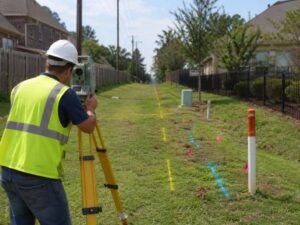
Creating a new utility easement takes more survey work than most people expect. An easement is a legal right for one party to use part of another’s land, and defining it well protects everyone involved. The survey has to pin down where the utility runs, how much room it needs and who owns every foot of ground along the way. Skipping that care leads to disputes long after the line goes in.
Defining the Utility Route and the Rights It Must Provide
A utility easement covers more than the pipe or cable itself. The line follows one path, but the legal right has to include room to install, operate, reach and maintain it. That working area is usually wider than the utility alone.
The survey defines both the route and the rights. It maps where the line runs and sets the width the utility needs to do its job over time. A right drawn too narrow can leave a crew with no legal room to make repairs.
Thinking ahead shapes this step. The easement has to serve the utility for decades, not just the day it gets built. Defining the full set of rights up front avoids a return trip to renegotiate later.
Confirming Ownership Along the Entire Proposed Easement
An easement binds land, so every owner it crosses has to be identified. The survey confirms parcel boundaries and titles along the whole route, not just at the ends. A single missed owner can stall the entire agreement.
Complications hide in the details. Common areas, public land and adjoining ownership can all sit along a route, each with its own holder. The surveyor sorts out who controls each stretch.
This confirmation protects the utility’s right. An easement granted by someone who doesn’t own the land is worthless. Verifying ownership first keeps the right solid.
Surveying Fixed Features That May Constrain the Easement
The ground along a route is rarely empty. Buildings, walls, trees, streams and existing utilities can all block or narrow the path. The survey locates these features so the route avoids them where it can.
Setbacks and existing lines add more limits. A new easement has to respect the room other features already claim. Mapping them lets the route thread through the constraints cleanly.
Finding conflicts early saves trouble. A route drawn without regard for a building or a stream runs into problems during construction. The survey brings these obstacles to light while the plan can still change.
Writing a Legal Description That Matches the Easement Exhibit
The written description and the drawn exhibit have to tell the same story. The description uses bearings, distances, curve data and width to define the easement in words. The exhibit shows the same area on a drawing.
Precision holds the two together. A commencement point, a clear centerline or strip definition and mathematical closure all make the description airtight. A gap between the words and the drawing invites a challenge.
This document carries legal weight for years. It gets recorded and relied on long after the survey crew leaves. Writing it to match the exhibit exactly is what keeps the easement enforceable.
Coordinating Survey Documents with Legal and Utility Review
A new easement passes through several sets of hands before it’s final. Owners, attorneys and the utility all review the survey documents, and each may ask for changes. The surveyor revises the work to address their comments.
Utility standards shape the details. A provider often has its own requirements for width, access and format that the easement has to meet. The survey accounts for these so the package clears review.
The surveyor’s role stays defined. They map and describe the easement, while the legal team handles the agreement itself. Clear coordination keeps each professional doing their own part.
Frequently Asked Questions
Can a utility easement cross more than one property?
Yes. A single utility line often runs across several parcels, and the easement can cover all of them. Each affected owner has to grant their portion of the right. The survey identifies every property along the route so none gets left out.
Does creating an easement transfer ownership of the land?
No. An easement grants a right to use part of the land, but the owner keeps title to it. The utility can access and maintain its line, while the owner still owns the ground. Ownership and the right to use are two separate things.
Should an easement be surveyed before the agreement is drafted?
Yes, whenever possible. A survey defines exactly what the agreement covers, which keeps the legal language precise. Drafting first and measuring later can create a mismatch between the words and the ground. Surveying up front prevents that gap
For a free land surveying quote, call us at (703) 854-9783 or send us a message by going here.
Posted in land surveying, land surveyor